You have bought the best cleanser, the most suitable moisturizer, tried serums, various face masks, exfoliators, and took care of the SPF layer on top – but your skin is still dry, itchy, and dull.
What could be the reason for that?
If you have been living in Dubai, the cause of your skincare disaster may not be skincare-related at all; it may be hidden in the water you wash your face and your body with.
The water you use for your morning rituals is underestimated as an element that affects the health of your skin. Water, both from the shower and the kitchen tap, plays a crucial role in determining whether your skin is going to be healthy and beautiful or not.
It is particularly relevant for the Middle East, where the ionic content of water varies significantly depending on the area and the plumbing system of the building you live in. Hard water, for instance, may leave unsightly deposits on your skin after you take a shower, whereas chlorinated water may dry it, damaging the top layer and leaving it red and sensitive.
Below are several skincare-related reasons why your skincare products may not help you achieve the glowing complexion you have been dreaming of, and why you should investigate the quality of water you use on a daily basis.
What Is Hard Water?
So, hard water is water that contains high levels of minerals such as: calcium and magnesium
If your house has hard water you might have noticed those annoying white chalky water spots on your glass shower doors, and white rings around your shower glass. What you may not know is that those unsightly water spots on your shower glass are not only ruining your health but also that you need a water softener.
Hard water is not only bad for your appliances and glass shower doors but it is also very bad for you
The most common complaint about hard water and how it affects the human body is, dry skin and dry brittle hair.
Hard water dries people out because the minerals in hard water attach themselves to the oils in our body.
These oils are what keeps us healthy and moisturized. You can try taking a quick hot shower to help combat the effects of hard water on your skin, but these effects can be much more severe if you have sensitive skin. Another common side effect of hard water is the appearance of scale deposits around the edges of your shower glass.
The calcium and magnesium ions in them can bind to certain surfactants on the surface of your skin, increasing their concentrations, and damaging the skin by accelerating water loss, especially in those with eczema
Does this mean all the sensitive-skinned locals in Dubai have a new threat to their skin health?
Not necessarily, since everyone’s skin type and tolerances are different, and the amount of minerals in different waters can vary
However, if you believe your skin to be negatively reacting to hard water, it would be best to either pay a visit to the dermatologist or just use filtered water for your morning showers.
Why Does My Skin Feel Tight After a Shower?
That oh so satisfying clean feeling you get after a shower isn’t always such a good thing.
In fact, scientists have found that hard water can actually leave behind more cleanser surfactants on the skin after washing, causing irritation and loss of the skin’s natural moisture, otherwise known as dehydration.
This can especially affect people with sensitive or dry skin.
What would your immediate reaction be?
You would probably go out and buy a heavier moisturizer.
Next, you might invest in a new hydrating serum.
Then, you would start incorporating facial oils and night creams into your skincare routine.
However, if you are reacting to an external everyday irritant such as the water you use to wash your face, these added products may not resolve your skin concern.
Your Skin Care Investments May Be Wasted Effort
Think about your skincare routine.
Do you wash your face in the morning, shower after a workout, wash your face again in the evening, and shower again after being outside?
You washed your face in the same water you used to shower.
Therefore, you should consider the products you are using on your skin in which you remove hard water.
If your skin is feeling soft after applying Moisturising Cream but tight again a few hours later, you blame the moisturizer.
But what about your surrounding conditions?
Dubai’s weather, air conditioning, humidity levels, frequency of showers, and even the water quality can affect your skin. Hard water is particularly notorious for doing that
But hard water can do more than just damage your skin.
It can wreak havoc with your hair as well!
Dryness of the water, minerals and deposits in water can leave your hair feeling dry, frizzy and unmanageable. If you feel that lately your hair is becoming more unmanageable or that your shampoo is not working as well as it used to, the water could be the cause
The same is true for your scalp. If you have been having issues with a dry itchy scalp that seems to never go away you are most likely blaming your shampoo and trying every other conditioning treatment you can find. The real cause could be your shower!
What About Chlorine?
Although related, water hardness and chlorine are two separate concepts.
Both chlorine and water hardness can have a negative effect on the health of your skin, but the effects of chlorine are especially noticeable during the shower.
The fact is that chlorine is used to purify municipal water supplies and while doing so, it often has a drying effect on the skin. Scientific inquiries into cleansing and skincare have given us answers that indicate how the water and cleansers we use affect our skin.
The factors involved in cleansing are more than just water being clean or not.
How hard the water is, what cleanser is used with it, the temperature of the water, and how often it is used all contribute to how well one’s skin is cleansed and as a result how well the skin turns out.
This is why the pursuit to obtain the best water for one’s skincare is so important to developing a good skincare regimen.
Why a Shower Filter Can Help
A shower filter is designed to work before your skincare starts to reduce the negative effect of water on your skin.
Rather than treating the symptoms of dry skin and damaged hair, water filtration targets the underlying cause of the harmful impurities in your water.
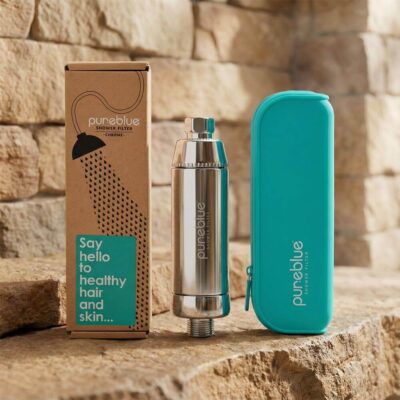
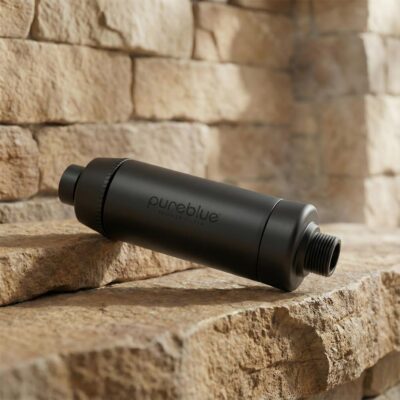
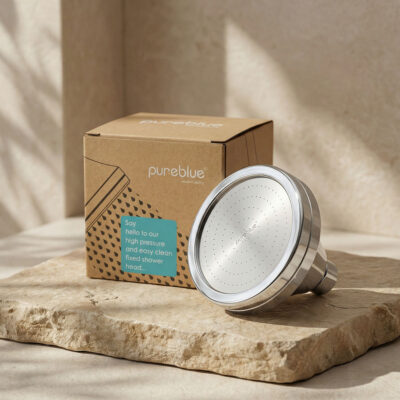
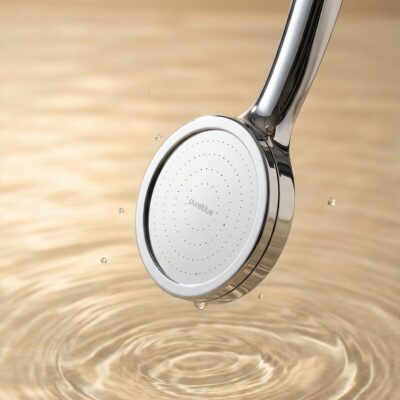
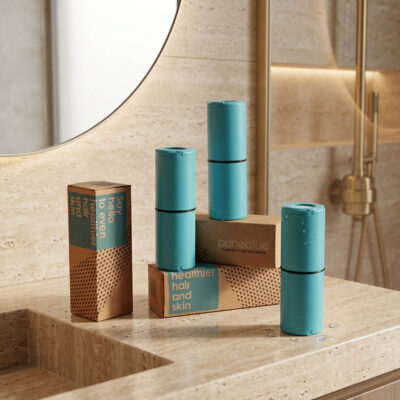
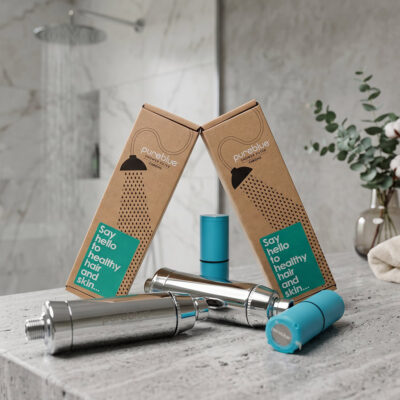
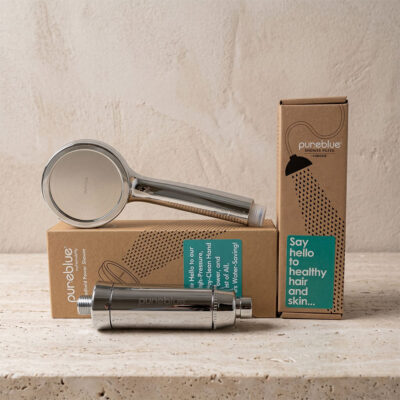
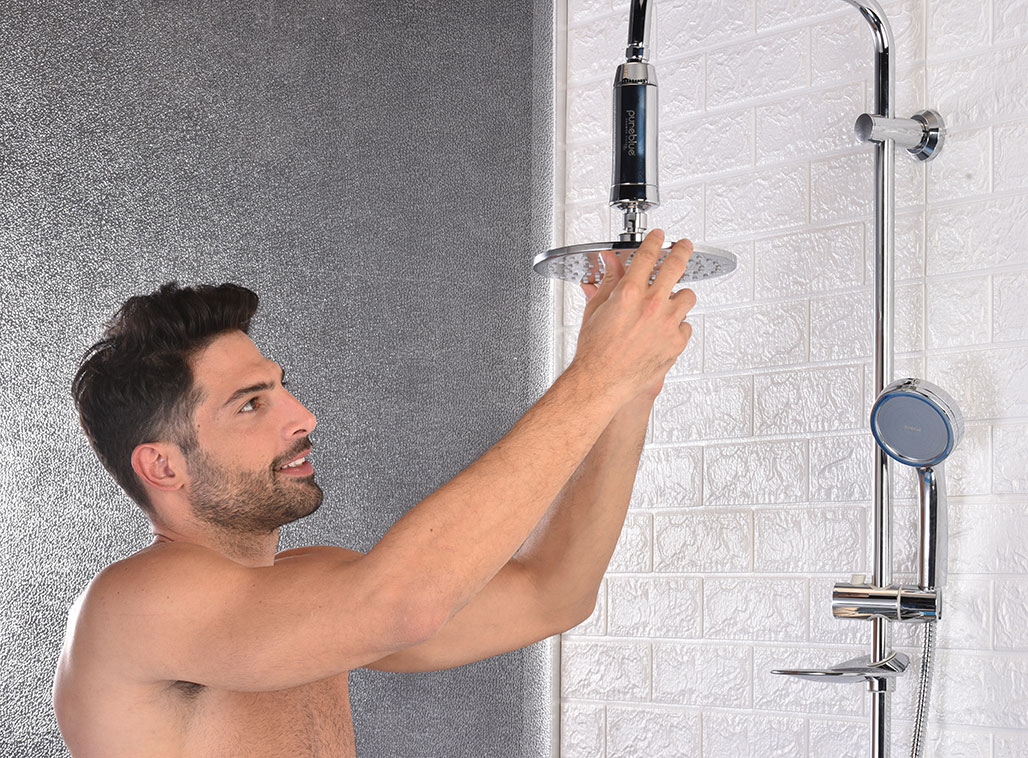
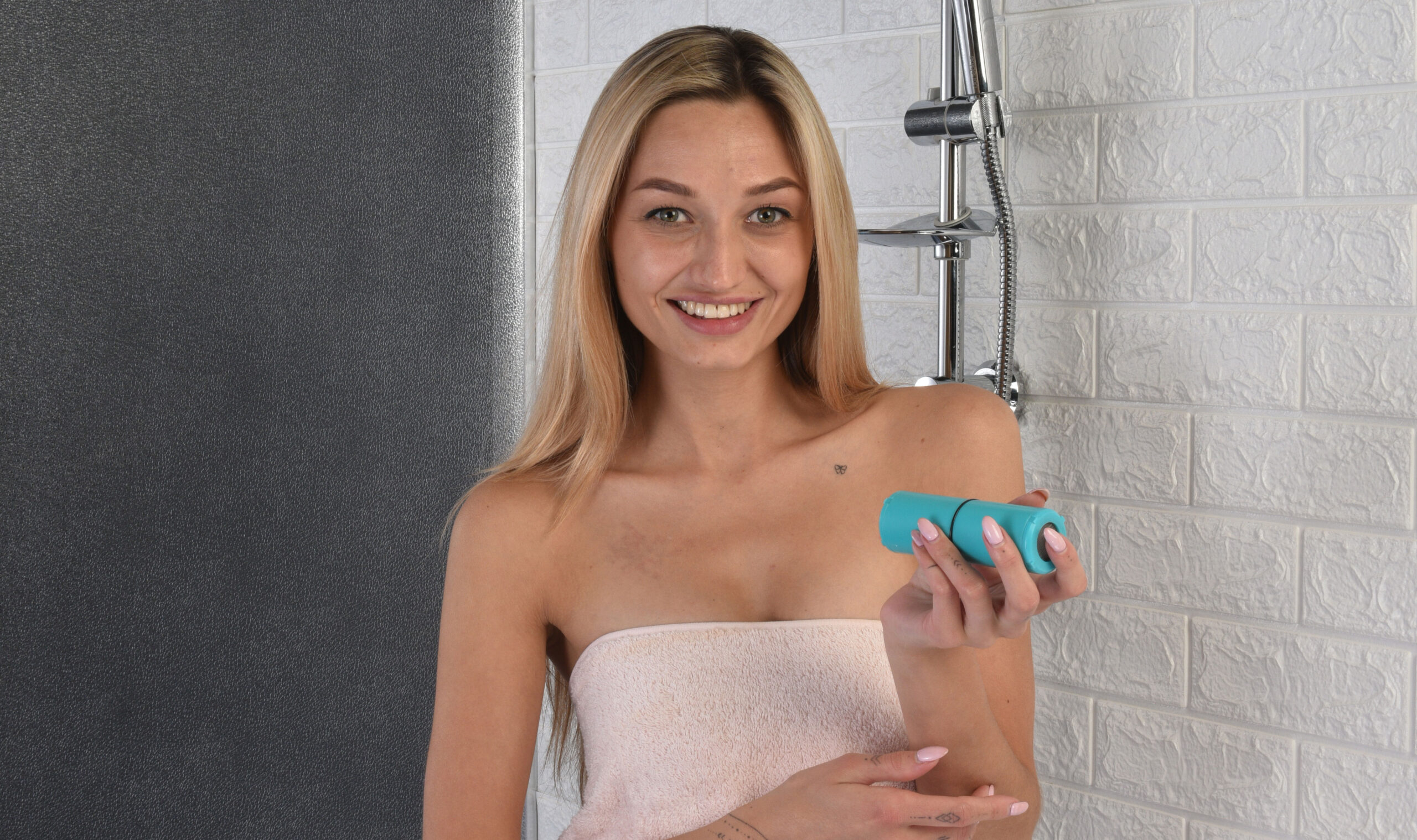
The H2O Pure Blue shower filter is made specifically for the water in UAE and GCC countries. It uses KDF 55 and other advanced filtration media to reduce chlorine, as well as some heavy metals and impurities that contribute to the hardness of the water. On top of that, H2O Pure Blue’s PRODermis™ technology helps your skin to resist minerals, effectively reducing the harmful effects of the hardness of your water.
According to the manufacturer, H2O Pure Blue manages to reduce up to 98% of chlorine and other harmful minerals in UAE and GCC water.
The crucial difference is that a shower filter is not a skincare tool. It is an essential supplement to your skincare routine that improves results by changing the composition of water before it touches your skin and hair.
How to Build a Dubai Friendly Skincare Routine
It is not about chopping everything from your bathroom cabinet in half. We need to assess the bigger picture.
How to Build a Dubai Friendly Skincare Routine:
1. Keep skin cleansing gentle
If you have noticed that your skin is unbearably dry after cleansing, ask yourself if your cleanser is stripping your skin of its moisture or if you are over-cleansing your skin.
A good cleanser should not leave your skin feeling dry and damaged; therefore, if it is doing so, think about changing it. Furthermore, if your skin is dry after cleansing, consider the possibility of over-cleansing and stripping it of its natural defense barrier.
2. Skip excessively hot showers
While a hot and prolonged shower is something many of us look forward to after a stressful day in the blistering heat of Dubai, such showers are extremely drying for the skin, so it is better to avoid them.
In order to avoid dehydrating the skin, it is crucial to take a minimum possible shower and not to make the water too hot.
3. Moisturise cream
In order to prevent the skin from becoming dry, moisturising cream has to be rubbed into the skin after washing. The process of washing should not be allowed to finish until the skin is completely dry and uncomfortable as, in this case, there will be no way to restore its former state.
4. Check your water
Examine your showerheads
Do you see deposits of minerals that make your bathroom look grey and covered with scale?
Does your skin feel worse after a hot shower than it did before?|
This could potentially mean that the water you are using is damaging your skin.
5. Consider shower filtration
If you are experiencing hard/mineral water and/or chlorine exposure issues, then you may want to consider installing a filter on your current shower.
H2O Pure Blue filters are designed so that they can be easily installed on top of your current fixed or handheld shower, no need to replace the whole shower set.
What a filter can NOT do
Realistically, we know that a filter can not cure all skin diseases.
Acne, eczema, pigmentation, rosacea, hormonal imbalances and more can be reasons for skin irritations, if you have these issues please consult your dermatologist.
In addition to that, we also know that not all skin irritations are caused by hard/mineral water.
Skincare, climate, food, allergies, stress, hormonal issues and much more can also play a major role in developing skin diseases.
The purpose of this article is not to convince you that your filter is the reason for your skin issues.
The Bottom Line
If your skincare regimen was working great before you came here but it suddenly stopped because the skin is feeling different, maybe you don’t need more products in your routine.
Your skin is exposed to your shower water on a daily basis, sometimes multiple times a day.
Hard water can have a negative effect on the performance of your cleansers and can also cause residue buildup and barrier disruption while other impurities such as chlorine can aggravate certain skin types. Studies have shown a correlation between hard water exposure, cleanser residue and a compromised skin barrier function.
Before you buy a new serum try looking at what’s running out of the shower head first.
Your skin is exposed to cleansing agents long before you apply that expensive moisturizer.
For Dubai residents and the wider Gulf region, softening your shower water can be an easy addition to any well-considered skincare routine. The H2O Pure Blue shower filter prototype, which has been developed right here in the region, utilizes cutting-edge filtration technology to remove chlorine as well as other unwanted impurities and minerals responsible for water hardness.
Because sometimes it’s not about adding more to your skincare. It’s about changing the way you wash.