That odd smell when you turn on the tap? It hits right away. Chlorine lingers in Dubai showers more often than people expect. You’re not wrong if your nose catches something harsh at the start of rinse time. Many face this daily – sharp air rising with steam.
At first glance, it might catch you off guard – yet an explanation exists. Better yet, straightforward fixes can transform your everyday shower into something that leaves you feeling cleaner, refreshed, even easier on the skin.
Here is a look at the reasons behind this – along with steps you might take.
Why Your Shower Smells Like Chlorine in Dubai
Out here, taps flow with water that’s gone through serious cleaning first. From salty sea to sink, heat and tech pull moisture up, leaving salt behind. What arrives at homes has been stripped of ocean grit by high-end processes. Machines zap away germs. Pipes carry only what meets strict checks. Freshness isn’t accidental – every drop earns its way inland.
Water gets treated with chlorine so it stays clean. This step wipes out tiny germs like bacteria and viruses. Without it, those microbes might make people sick. Put simply, chlorine isn’t an accident – it’s meant to be there.
Water stays clean while moving through pipes and tanks around town. This happens because safeguards are built into how the system operates.
Why the Chlorine Smell Gets Stronger When You Shower
Steam rises, carrying gases along for the ride. That sharp smell? Likely chlorine waking up your nose. Water heats, air changes, scents shift. Breathing deep means noticing what you didn’t taste. Showers turn invisible elements into something detectable. Warm mist pulls hidden traces into view. What slips past on your tongue hits hard in vapor form
- Heat speeds up chlorine release
Hot water releases chlorine faster, sending it into the air. That sharp scent hits your nose right when the shower starts – steam carries the gas where you breathe.
- Small rooms make it stronger
Most times bathrooms have walls all around, so the air cannot escape easily. Because of this, chlorine fumes stay inside, building up more than in open spaces. The smell hits harder even if the amount stays the same.
- Touching Skin and Hair
Water touches your skin right away when you shower. Because it stays on you awhile, chlorine does too – unlike quick handwashing where it barely lingers.
What Chlorine in Dubai Shower Water Does to Skin and Hair
Most health guidelines say small doses of chlorine won’t harm you over time. Because it stops dangerous germs, clean water often contains traces of it.
Just because something seems safe does not guarantee it works best – particularly if you face it daily while showering.
Repeated exposure to chlorinated water can lead to:
- Dry or irritated skin
- Itchiness or sensitivity
- Dull or brittle hair
- Fading of hair colour
- Increased scalp dryness
Moisture vanishes when chlorine breaks down the oils meant to shield skin and strands. That happens since pool chemicals dissolve the barriers keeping hydration locked in.
When skin is already sensitive, dealing with eczema or dry patches makes reactions stand out more. Not everyone feels it the same way – those with fragile barriers notice shifts faster. A small change might show up clearly on some, barely register on others. What seems mild to one person hits harder on compromised skin.
Hard Water Makes the Problem Worse
Chlorine isn’t the only factor affecting your shower experience.
Minerals such as calcium and magnesium give Dubai’s water its hard quality. Though unseen, these elements shape how the liquid behaves in daily use. What you notice might be spots on glassware or buildup in kettles. This type of water flows through many homes across the city. Instead of being pure H2O, it carries natural traces from underground sources. Over time, appliances may feel the effects. Still, drinking it remains common practice here. The presence of dissolved solids defines much of its character.
Though harmless, these minerals might still:
- Leave residue on your skin
- Bubbles struggle more when soap tries to foam up. Tougher conditions slowdown suds. Lathering hits a wall under pressure. Froth fades faster in resistance. Soap fights to bubble when things get rough
- Cause buildup on your hair and scalp
Water treated with chlorine might worsen dry skin, leaving it tighter and thirstier once you step out of the shower.
Why It Feels Worse After Moving to Dubai
It hits people once they’ve moved. Problems show up later, not before.
This is because:
- Heat hangs heavy now. Already, the air pulls moisture fast. This place gets little rain as it is. Temperature climbs without much warning. Dryness sticks around longer each year Moisture slips away faster from skin
- Water composition is different from other countries
Maybe your daily habits stay the same, yet under these conditions, hair and skin can shift without warning. Still, subtle shifts happen even when nothing else does. Out of nowhere, texture or tone may alter despite familiar patterns. Often, change appears where you least expect it – right on the surface.
Shower Water Warning Signs
Wondering if chlorine might be behind how you feel? Here’s what often shows up:
- That tightness on your skin shows up the moment you step out of the shower
- You need to moisturise more often than usual
- Your hair feels rough or harder to manage
- There’s a noticeable chemical smell in the bathroom
- Water feels sticky when washing hair. Lather clings instead of sliding away. Slickness lingers where it should vanish. Bubbles resist the drain longer than they ought
Most of these won’t harm you – yet each hints that better water might help. Still, small changes could make a difference down the line. Odd tastes or smells? They whisper more than shout. Not dangerous, exactly – just nudges toward something cleaner. Every sign adds up, even when it feels minor.
How to Remove Chlorine From Your Dubai Shower
There is one effective intervention and several supporting measures:
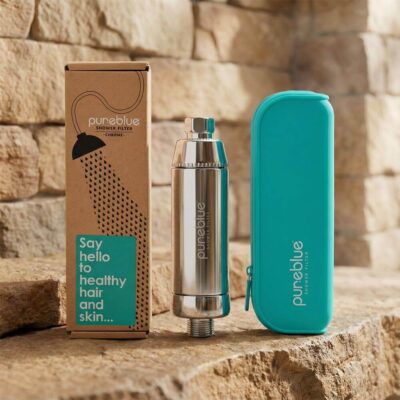
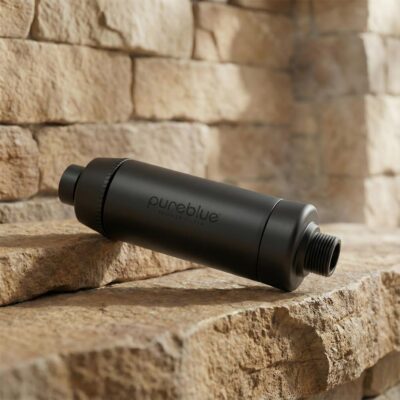
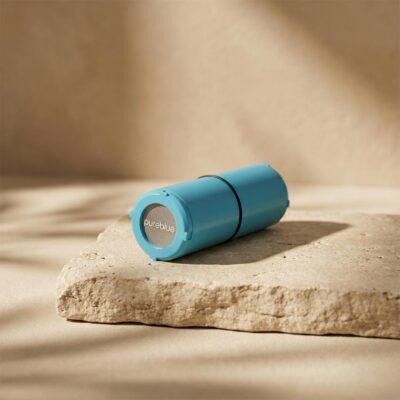
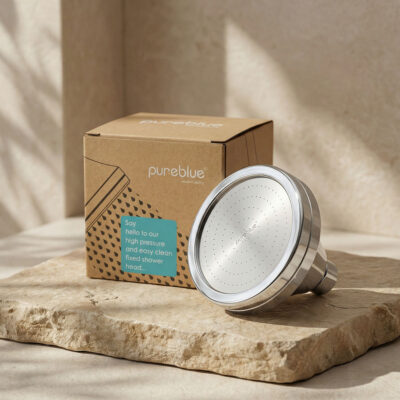
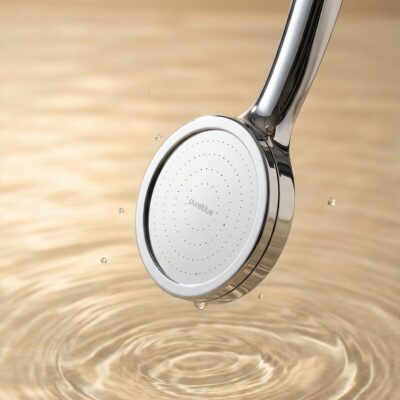
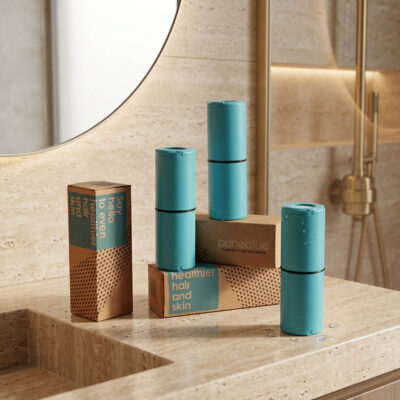
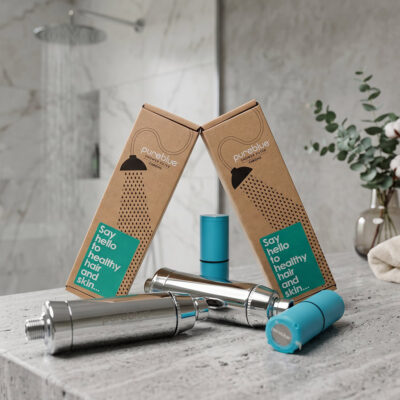
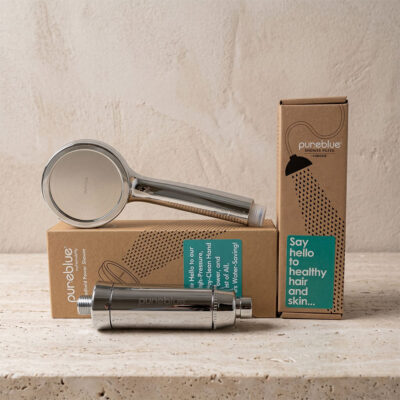
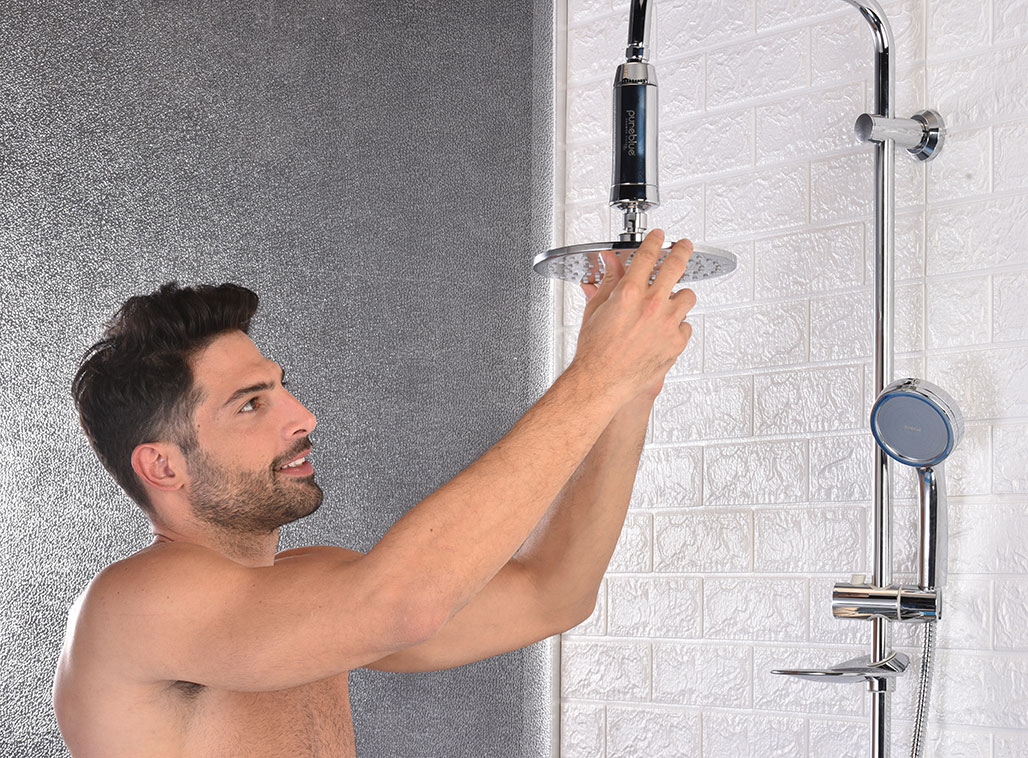
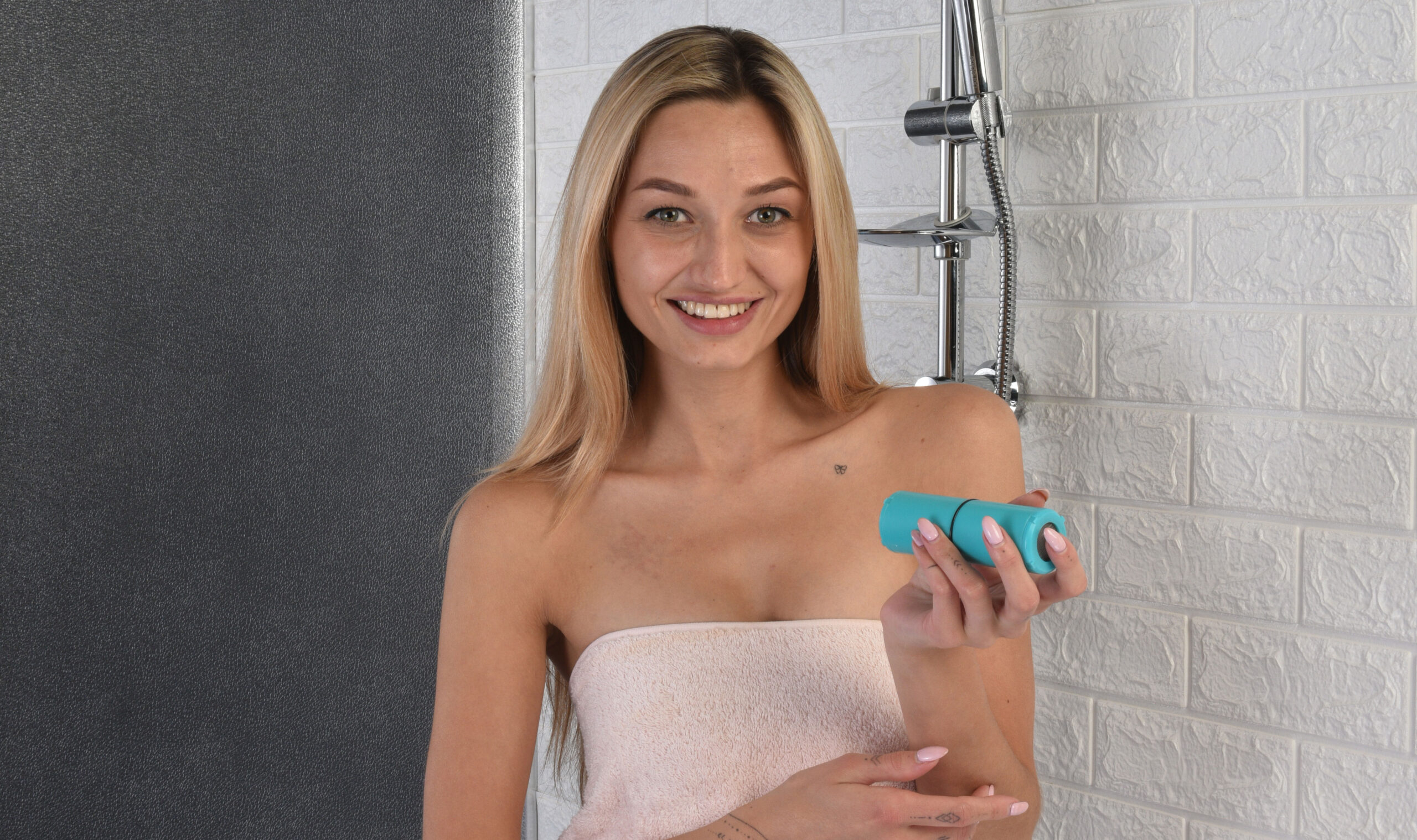
Primary: Install a shower filter. The Pure Blue shower filter installs on any fixed or handheld showerhead in minutes using the installation guide — no tools, no plumber. KDF 55 media removes 98% of free chlorine through a redox reaction, neutralising it before it contacts skin or enters the air as gas. It also reduces heavy metals and inhibits bacterial growth within the filter housing. Replacement cartridges last approximately six months under typical UAE usage and are swapped in under two minutes using the cartridge replacement guide. Browse all filter options including the Family Pack at 20% off for two-bathroom households.
Supporting: Ventilate the bathroom during showering. An extractor fan running during a shower prevents chlorine gas from accumulating to the concentrations that make the smell most noticeable. This does not remove chlorine from the water — it reduces inhalation exposure by diluting the bathroom air. A filter removes the chlorine entirely.
Supporting: Run the shower for 10 to 15 seconds before stepping in. Water that has sat in building pipes overnight or over a weekend can have higher chlorine concentration from extended contact time with pipe materials. Flushing the standing water reduces the initial chlorine spike.
Supporting: Lower shower temperature slightly. Chlorine volatilises faster at higher temperatures. Reducing shower temperature from 42°C to 38°C measurably reduces the rate of chlorine gas release into the bathroom air during the first minute of showering.
Does Your Shower Still Smell Like Chlorine After Filtering?
If your shower still smells like chlorine after installing a filter, three factors are worth checking:
Cartridge saturation. KDF 55 media has a finite chlorine removal capacity. A cartridge used beyond its six-month rated life will show reduced performance. Replace on schedule using the cartridge replacement guide.
High incoming chlorine concentration. In buildings where tank maintenance is irregular or where DEWA has recently increased chlorine dosing in the distribution network, incoming chlorine can temporarily exceed the filter’s rated capacity during peak usage. This is unusual but possible. Contact Pure Blue directly if it persists after cartridge replacement.
Installation gap. If there is any water bypassing the filter media — from an incomplete thread seal or a cracked housing — a portion of unfiltered water will mix with filtered output. The installation guide covers the correct seal procedure.
Over 185,000 UAE and GCC customers use Pure Blue. If your shower smells like chlorine and you have the filter correctly installed with a current cartridge, contact the support team directly — the product carries a lifetime warranty on the filter unit.
Most taps in Dubai carry a whiff of chlorine standard practice for clean water delivery. Yet putting up with its aftereffects? Not required.
Most days feel different once you know what’s hiding in your glass. Tiny changes add up when you pay attention to the details others ignore. Water shapes how you move through mornings, one sip at a time.
Water isn’t only safe. It’s how it moves on your skin. How it lingers in the air. What happens when you step into its flow. The moment changes. You feel it before you think.