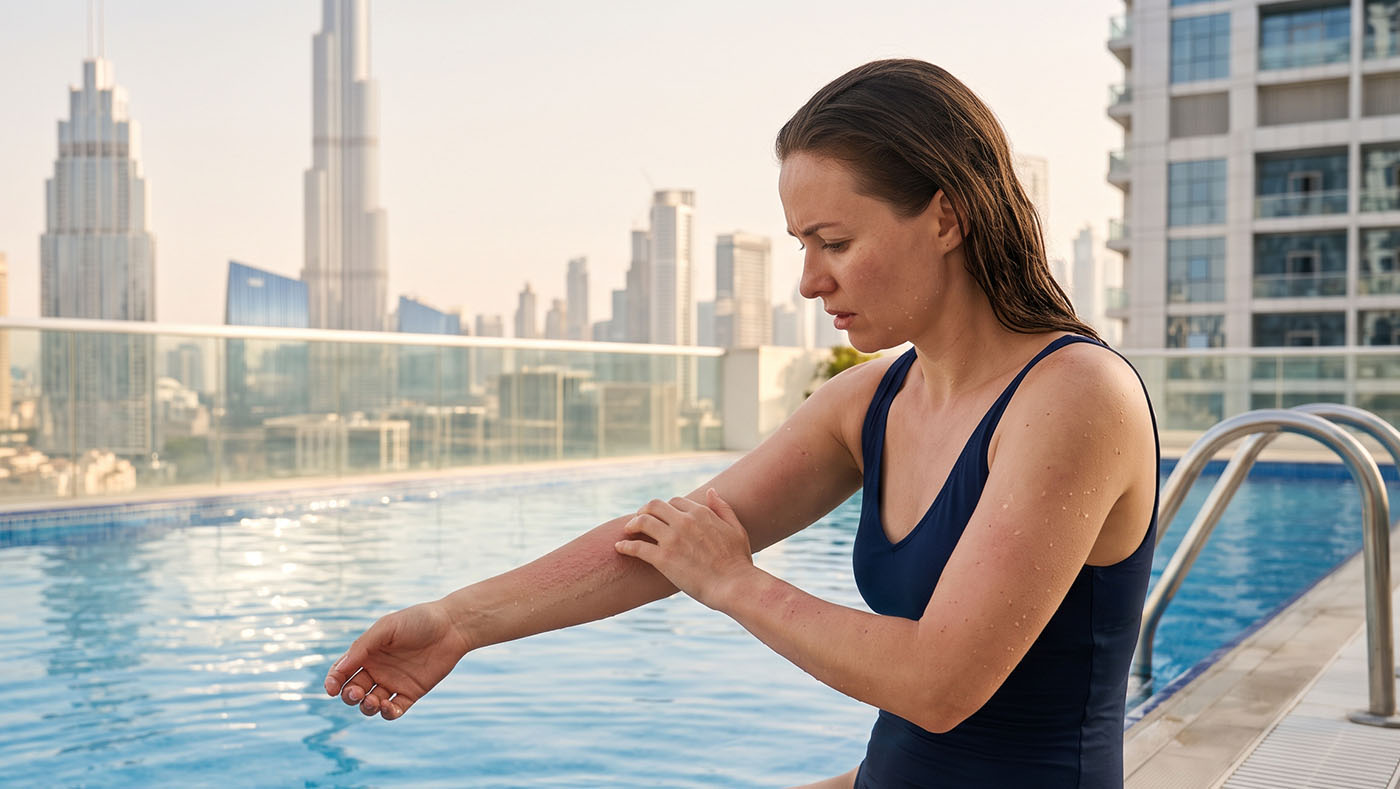
Swimming is an activity that is common in Dubai. People go for swimming at their rooftop pools, luxurious hotel swimming pools, resident communities’ swimming pools, and beach clubs among other places. It is perhaps one of the easiest methods of escaping from the UAE hot weather. Nevertheless, as much as a swim will leave you refreshed and relaxed, chances are high that you will be having some changes on your skin after taking a swim.
You might experience tightness on your skin after swimming. Your legs may seem dry, your arms itchy, or your skin lotion does not work. These are just a few of what happens after swimming. This will make you wonder if it is caused by swimming pool chlorine.
Well, the simple answer is that chlorine pool water might cause dryness and itchiness on your skin, although not every person’s skin will get damaged from it.
However, when you combine swimming in Dubai with plenty of time spent under the sun, constant use of air conditioners, and regular showers, you need to know how to take care of your skin after swimming.
Let us discuss what happens to your skin when it comes into contact with chlorine, why it can be so dry after swimming in Dubai, and what you can do to create an easy skincare routine after taking a dip in the pool.
Why Are There Chlorine Compounds in Pools?
Before considering chlorine responsible for all your skin problems and irritations, you should remember that this compound is added to the water of pools for some reasons.
Chlorine is a disinfectant. It allows controlling the level of harmful microorganisms in the water in the pool. Otherwise, the pool will become a place full of dangerous bacteria and other pathogens that will lead to various diseases.
When chlorine enters the water of the pool, it creates a number of disinfectants that prevent any danger for the health of the people using it.
Nevertheless, there are those who will continue to experience discomfort on their skin after even a properly maintained pool.
This is because chlorine is highly reactive and may affect the normal lipids on the skin.
The lipid functions in maintaining a proper functioning skin barrier, which protects the skin. The skin barrier prevents moisture loss and protects the skin from irritants.
If the skin barrier is not working well, you will feel itchy, tight, flaky, and red after swimming. You are not allergic to chlorine.
Is Chlorine Affecting Your Skin?
The skin has a thin layer that plays a role in retaining moisture in the skin while protecting the skin from any irritation. Exposure to chlorinated water affects this balance especially when the skin is sensitive or dry.
Some of the common effects include:
1. Dryness and Tightness
The feeling of having tight skin is a very common complaint for swimmers after getting out of the water.
The act of being surrounded by water for such a long time and being subjected to the effects of chlorine or other chemicals in pools can make one’s skin feel dry. This sensation will be felt even more after one uses a towel to dry off and steps into a cool, air-conditioned place.
This sensation will be experienced even more often if one goes swimming multiple times per week.
2. Itching and Redness
Certain individuals get itchy or reddened areas after they have spent some time in the pool.
This could result from coming into contact with chlorine and other pool irritants with one’s skin. Individuals suffering from eczema, skin barrier deficiency or those who experience sensitivity of the skin are likely to be affected.
It is good to keep in mind that all rashes which occur after one has been in the pool should not automatically be blamed on chlorine. Possible causes could include poor pool water management, exposure to substances in the area surrounding the pool or other skin conditions.
In case of persistent rashes, one should seek professional advice.
3. Greater Sensitivity of the Skin
Your skin is likely to become more sensitive when it is already dry.
In case the skin barrier is compromised, ordinary skin care products like perfumed soaps and scrubs and certain ingredients in skin care products may irritate or sting. The products you have been using for some time may now be bothering you.
It’s another reason why it’s important to simplify your post-swimming ritual.
4. Flares in Dry or Eczematous Skin
Those with eczema or very dry skin may notice that their skin becomes irritated or itchy when they enter the water. As previously mentioned, this varies greatly from person to person and does not apply to everyone.
If you have eczema, it’s important to consult your doctor about swimming, especially if your condition worsens while swimming in the pool.
There are other factors besides chlorine that can contribute to the dryness of your skin after swimming in Dubai.
Combination of Heat and Sun
A number of times you might go for your swimming sessions in Dubai outdoors. It means that you will be subject to both the pool water and the heat of the sun.
The sun exposure can result in sunburns and inflammation, while the physical activity outdoors can contribute to dehydration of your skin. Combined with the frequent swims, it may cause certain discomfort as well.
Distinguishing between skin irritation from chlorine and sunburn is vital because these two problems have different solutions.
Use a sunscreen with a minimum of SPF 30 and is waterproof.
Dubai is a city known for its extreme heat, but the air conditioning combates the heat. However, the indoor air has a low humidity level.
Your skin goes through processes post-pool. First, it becomes wet after the bath, then it gets exposed to the chemicals in the swimming pool and dried by either a towel or a cold blast from air conditioning. The skin becomes dry, which causes discomfort.
Applying a moisturizer immediately after bath is vital to ensure that the skin is able to lock in moisture.
Frequent Swimming and Showering
Individuals who regularly swim on a daily basis or even weekly need to understand that this will be relevant for them.
It is common practice to shower prior to swimming and after swimming as well as another time during the day. It should be noted that although it is good to rinse off post-swim, too much exposure to hot water and strong cleansers can lead to dry skin.
A short lukewarm shower is always more advantageous than a long hot shower.
Is Chlorine the Same as Hard Water?
No, they are slightly different, but by understanding the differences, you will know what the right way to look after your skin is.
Firstly, it should be noted that chlorine is a chemical element, which is added to swimming pools in order to ensure sanitization. The term hard water is used to refer to the water, which contains increased levels of minerals, especially calcium and magnesium.
This kind of water reacts with cleaning chemicals and may contain some residues, which causes discomfort in people’s skin during washing.
Residents of Dubai may use the water, which contains high level of minerals depending on their water supply and plumbing systems in the buildings. However, the level of minerals varies, which proves the fact that not everyone uses the water with the same level of hardness.
When you swim in a chlorinated pool and afterwards wash yourself at home, you have two types of problems to deal with:
Chlorine in the pool: May make you feel uncomfortable during swimming or may even cause irritations.
Mineral abundant water: Affects the performance of some cleansers.
Not necessarily will the fact that it is a shower filter help you with all these problems because there are various types of filters which filter different things in the water depending on the filtration system.
It is thus very important to have a clear aim before using any of these products.
How to Take Care of Your Skin Before and After Swimming
You don’t have to use any special skin care products to ensure that swimming is comfortable.
1. Shower Prior to Diving into the Pool
Taking a quick bath prior to diving into the pool is a good way to wash away sweat, cosmetics, and other things that may be on your body.
It is essential to take showers in case of pool hygiene. Do not forget about this procedure; do not use products that are unsuitable for swimming.
2. Make Swimming Sessions Comfortable
Long periods spent in the water result in additional exposure to the pool water. In case you feel irritation during swimming, check if you can shorten the period of your swim.
Try to listen to your skin’s reactions, not others.
3. Take a Shower After Swimming
Once you have completed swimming, go and take a bath right away.
Make sure that you use clean and warm water as well as a mild soap when necessary.
Do not scrub your skin after swimming, especially if you are feeling any kind of irritation from your skin.
The shower will rinse away any extra pool water that sticks to your skin.
4. Applying Lotion to Drenched Skin
This is one of the easiest things you can do after swimming.
Rather than rubbing yourself dry with a towel, pat yourself dry. This is because you should apply the lotion when your skin is still damp, thus increasing its efficacy.
Get yourself an unscented lotion that has any of the following ingredients: glycerin, ceramide, or petroleum jelly, based on your skin’s requirement.
A thick cream is better suited than a lotion for very dry skin.
5. No Over-Cleansing
It’s only normal that you would like to try several things in order to ensure that you remove all the chlorine from your body. However, this is not advisable because it can have an adverse effect on your dry skin. It’s recommended that you avoid using harsh products and hot water. If you’re an avid swimmer, then keeping things simple will work for you.
6. Pay Close Attention to Any Symptoms You Have
Dry skin due to swimming is common, but if your symptoms are persistent, then you should take this matter seriously.
In the case that you notice any signs of suffering as in: skin problems like pain or itching or rashes, swelling, blisters, etc. that are still there even after washing and applying lotion, consult your doctor.
Also, if you observe allergy symptoms affecting your breathing or causing swelling in your tongue or throat, make sure to contact the emergency services immediately.
Would it be advisable to use a shower filter prior to swimming?
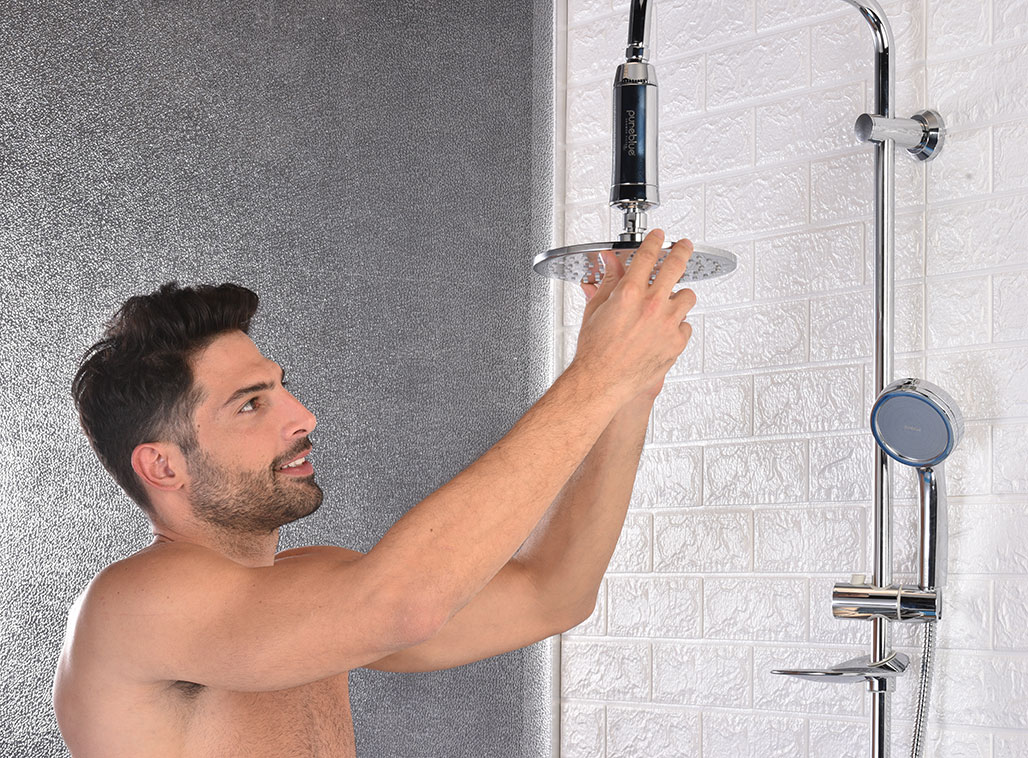
It is definitely worth the trouble of using a shower filter throughout the process of taking a shower.
A quick rinse of fresh water and use of mild skin care products right after swimming should be the priority in this situation. It must be noted that a shower filter cannot be used to interfere with this process and cannot guarantee the complete removal of substances that irritate the skin.
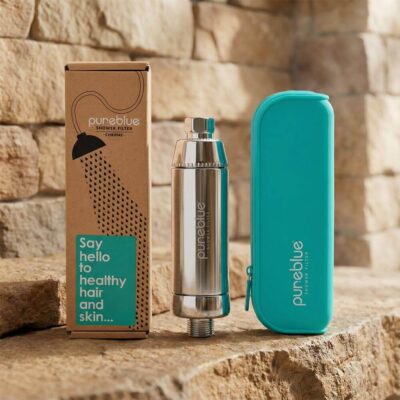
The components used in various shower filters differ. Some shower filters are specially designed and tested to reduce specific contaminants, such as some forms of residual chlorine under specific circumstances. Shower filters could take care of other matters concerning the water quality as well.
When you want to buy a shower filter for reduction of chlorine levels, it is essential to pay attention to independently confirmed efficiency of a product, to specific chlorine substances which are filtered out, and to the method of filtering.
H2OPureblue encourages customers to become aware of their water and showering needs. It is crucial to analyze the filtration capacity, maintenance process, and replacement of the cartridge of your chosen shower filter.
Moreover, it is vital to realize that the shower filter is not the same as a general water treatment unit and that its performance depends on several aspects.
In the case of the post-swimming dryness issue, the most logical starting point for the consumer should be the following: rinsing immediately after getting out of the water, applying a mild cleanser, using a moisturizer, and finding the source of skin irritation.
And What About Your Hair After Swimming?
While the emphasis of this article is on the skin, there might be some issues related to the state of your hair.
The pool water may make your hair dry, rough, and tangled. Those individuals with chemically treated or colored hair should give extra attention to their haircare.
For hair protection, you should:
- Wash your hair well after swimming.
- If needed, use a mild shampoo.
- Use a conditioner for giving softness to your hair.
- In case you are a regular swimmer, wear a swim cap.
- Do not use any heat-based hair styles if your hair is dry.
Like the skin, hair care should be done according to the hair type and its condition.
Post-Swimming Skincare Routine for Residents of Dubai
In case you would like to make the post-swimming skincare routine easy for yourself, then here is a very simple one that you can adopt after each time you go to swim.
Rinse. The first step is to take a shower with lukewarm water immediately after swimming.
Gentle cleansing. The second step involves using gentle body wash, and not soap or scrubbing.
Pat dry. The third step entails patting your skin dry, instead of vigorous rubbing with a towel.
Moisturising. Fourthly, moisturise your skin while it is still moist.
Protection. In case you are coming back outside, use the right kind of sun protection.
Observe. Finally, observe whether there is any improvement in dryness or itching after following this skincare routine.
All these steps are very simple and easy to follow regardless of whether you swim in your community pool, in a hotel pool during the weekend, or if you make swimming an integral part of your workouts.
Frequently Asked Questions
Can swimming pool chlorine harm my skin permanently?
For healthy individuals, sporadic contact with the correct level of chlorinated pools will not usually have any long-term effect on the health of your skin. However, continued contact may lead to irritation and dryness of the skin in people with sensitive or eczema-prone skin. Continued symptoms require the attention of a medical professional.
Why does my skin itch after swimming in Dubai?
The itching can be a result of irritation due to pool chemicals, dry skin, eczema, or anything else. Excessive sun exposure and hot showers can also cause itchiness.
Do I need to take a shower after I swim?
Yes. Taking a shower after swimming will help you to wash off any remaining pool water from your body. Use warm water and soap if necessary, and apply moisturizer after that.
Is it possible to have a shower filter that removes chlorine from the water?
There are some shower filters on the market capable of reducing the amount of specific chlorine forms. The actual performance of the filter depends on the model and the test conditions, so check the manufacturer’s filtration information prior to purchase.
Is it safe for me to swim daily if I suffer from dry skin?
It is usually safe for individuals suffering from dry skin to swim. However, it is necessary for them to change their skin care regime. Ensure that you rinse immediately after swimming, avoid harsh cleansers, moisturize regularly and check any signs.
Final Thoughts: Swim in the Pool but Not at the Expense of Your Skin
There are numerous possibilities of keeping yourself in shape and energized in Dubai, and one of them is swimming; you don’t have to worry that swimming in a chlorinated pool will always affect the condition of your skin.
What matters is listening to what your skin tells you. If after every swim you experience a feeling of your skin being tightened, dry, and itching, consider all possible factors: the water of the pool, the sun, air conditioning, and your showers.
Perhaps, rinsing yourself off after every time you leave the pool, cleansing, and moisturising will be quite useful for your skin. However, if the issue persists, you should visit professionals to know the true cause of it.
Here, at H2OPureblue, we are confident that water awareness should begin from understanding the water you use and from choosing the appropriate products based on their purposes and test results.
Take care of your skin when swimming. Enjoy your time in the pool. Enjoy your showers.